












Group Welcomes IMF Report, Says Rise in Poverty Predates Tinubu Reforms
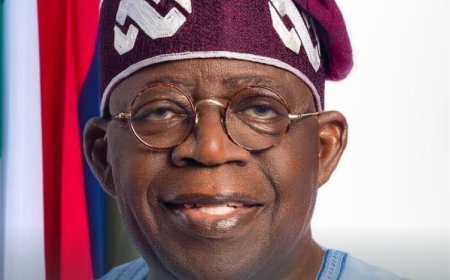
The Democratic Front (TDF) has welcomed the recent statement by the International Monetary Fund (IMF) on Nigeria, particularly its positive assessment of the economic reforms being implemented by the administration of President Bola Ahmed Tinubu.
However, the group questioned suggestions that the rise in Nigeria's poverty rate is directly linked to the current administration's reform policies.
In a statement jointly signed by its Chairman, Mallam Danjuma Muhammad, and Secretary, Chief Wale Adedayo, TDF noted that the IMF report acknowledged that nearly three-quarters of the increase in poverty—from 40 percent to 61 percent, as reported by the World Bank—occurred between 2019 and 2023, before President Tinubu assumed office.
"It is important to acknowledge the section of the report which states that three-quarters of the increase in poverty occurred before the present administration came into office," the group said.
According to TDF, the period between 2019 and 2023 coincided with the aftermath of the COVID-19 pandemic, which severely disrupted economic activities, weakened household incomes, and affected national revenue streams.
"The post-COVID years were marked by significant socio-economic challenges that deprived many Nigerians of stable sources of income. Economic disruptions across supply chains had a devastating impact on cash flow and overall economic productivity," the statement said.
The group argued that the rise in multidimensional poverty reflected the lingering effects of the pandemic rather than the direct consequences of the Tinubu administration's Renewed Hope Agenda.
TDF also pointed to external global factors, particularly the ongoing crisis in the Middle East, as additional pressures on Nigeria's economy.
It maintained that before the escalation of tensions involving Iran and the resulting disruptions in global oil markets, the administration's reforms had begun yielding positive results through steady economic growth, relative exchange rate stability, and more competitive petroleum pricing.
"In a country like Nigeria, where fuel prices significantly influence the cost of living, developments in the global oil market inevitably affect domestic economic conditions. The current geopolitical tensions have created fresh challenges for economies around the world," the group stated.
TDF further argued that Nigeria was better positioned to withstand these shocks because of the economic adjustments already undertaken by the Tinubu administration.
The group also commended the government's commitment to ensuring that the long-term benefits of the reforms translate into tangible improvements in the lives of Nigerians.
It cited recent government approval of over N700 billion for payments to 1,240 local contractors as evidence of efforts to stimulate economic activity, fulfil contractual obligations, and improve liquidity across the supply chain.
"This demonstrates the administration's determination to ensure that the gains of economic reforms ultimately impact the welfare of ordinary Nigerians while strengthening economic activity across various sectors," the statement added.
What's Your Reaction?
 Like
0
Like
0
 Dislike
0
Dislike
0
 Love
0
Love
0
 Funny
0
Funny
0
 Angry
0
Angry
0
 Sad
0
Sad
0
 Wow
0
Wow
0