









EXPLOSIVE BUDGET SHOWDOWN: Senate Grills Finance Minister as ₦58.19trn Plan Faces Revenue, Debt Storm
EXPLOSIVE BUDGET SHOWDOWN: Senate Grills Finance Minister as ₦58.19trn Plan Faces Revenue, Debt Storm

EXPLOSIVE BUDGET SHOWDOWN: Senate Grills Finance Minister as ₦58.19trn Plan Faces Revenue, Debt Storm
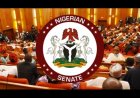
Tension gripped the Senate as lawmakers launched a sweeping interrogation of the Federal Government’s economic team over the proposed ₦58.19 trillion 2026 budget, raising alarm over weak revenue performance, ballooning debt and a widening fiscal deficit that undermined the 2025 plan.
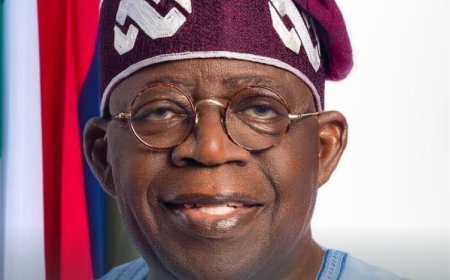
At the centre of the storm was Minister of Finance and Coordinating Minister of the Economy, Wale Edun, who faced pointed questions from members of the Senate Committee on Appropriation.
Chairman of the Committee, Solomon Yayi, made it clear the era of “rubber-stamp budgeting” was over.
“This is not routine oversight. This is a fiscal autopsy,” Yayi declared, summoning the President’s full economic team to defend both the performance of the 2025 budget and the assumptions underpinning the ambitious 2026 proposal.
A Fiscal System Reset
In a major policy shift, Yayi announced that by March 1, Nigeria would return to a single active budget cycle, ending the tradition of overlapping fiscal years.
Outstanding obligations from 2024 and 2025 will be consolidated into the 2026 appropriation framework. Ministries, Departments and Agencies (MDAs) were reminded of a presidential directive requiring them to clear 30% of prior commitments before March 2026, with the remaining 70% absorbed into the new budget.
But proceedings nearly collapsed before substantive discussions began.
Lawmakers accused top officials of repeatedly postponing appearances and treating the Senate with disregard. Some agencies failed to attend entirely.
“This sitting has been postponed more than five times. We cannot continue like this,” one Senator fumed, warning that non-compliant agencies risk budget suspension.
Grim 2025 Reality Exposed
When Edun finally took the floor, he conceded that the 2025 fiscal year had fallen far short of projections.
Key performance indicators presented:
Federation revenue performance: 53%
Oil & gas revenue performance: 18.9%
Capital budget implementation: 51.8%
Federal revenue shortfall: ~₦5 trillion
Debt service overshoot: ₦4 trillion
Overall funding gap: ~₦9 trillion
“Actual receipts barely covered recurrent expenditure,” Edun admitted.
Salaries, pensions and statutory transfers were prioritised, while capital projects suffered severe cuts.
The minister explained that the Federal Government bore the brunt of the oil revenue collapse, while non-oil revenues, especially VAT, largely flowed to sub-national governments.
The ₦152 Trillion Debt Question
Lawmakers pressed hard on Nigeria’s swelling public debt, now estimated at about ₦152 trillion.
Edun argued that much of the increase reflected accounting transparency rather than reckless borrowing:
₦30 trillion in previously unrecognised Ways & Means advances formalised
₦49 trillion added due to exchange rate revaluation
Approximately ₦27 trillion newly borrowed under the current administration
“This increase is driven mainly by accounting corrections, not excessive borrowing,” he insisted.
Still, senators remained uneasy about debt sustainability amid persistent revenue weakness.
Can Oil Carry the Budget?
Central to the committee’s concern was the oil revenue assumption underpinning the 2026 plan.
With 2025 oil and gas performance at just 18.9%, lawmakers questioned the credibility of the projections supporting the ₦58.19 trillion spending framework.
Edun stopped short of giving absolute guarantees, deferring validation of oil revenue targets to collection agencies.
He outlined a three-stage economic recovery strategy:
Market corrections
Stabilisation
Growth acceleration targeting 7% GDP expansion
The government aims to raise tax revenue to 18% of GDP through domestic mobilisation, asset optimisation and private-sector-led investment via Public-Private Partnerships.
He cited a $20 billion investment commitment from Shell as evidence that reform measures were restoring investor confidence.
“No Revenue, No Budget”
Despite assurances, the Senate’s message was blunt:
Can Nigeria realistically fund a record ₦58.19 trillion budget after achieving barely half of its revenue target the previous year?
Lawmakers warned that without credible revenue projections and enforceable fiscal discipline, the 2026 budget risks deepening deficits rather than accelerating recovery.
As the rest of the economic team prepares to face the Appropriation Committee, what began as a routine defence has evolved into one of the most consequential fiscal confrontations of the administration.
The outcome may determine whether the 2026 appropriation becomes a genuine reform instrument — or another chapter in Nigeria’s cycle of deficit-driven budgeting.
What's Your Reaction?
 Like
0
Like
0
 Dislike
0
Dislike
0
 Love
0
Love
0
 Funny
0
Funny
0
 Angry
0
Angry
0
 Sad
0
Sad
0
 Wow
0
Wow
0