






IWD 2026: BPW President Ojobo Ode Atuluku Pushes ‘Give to Gain’ Strategy to Drive Women’s Empowerment
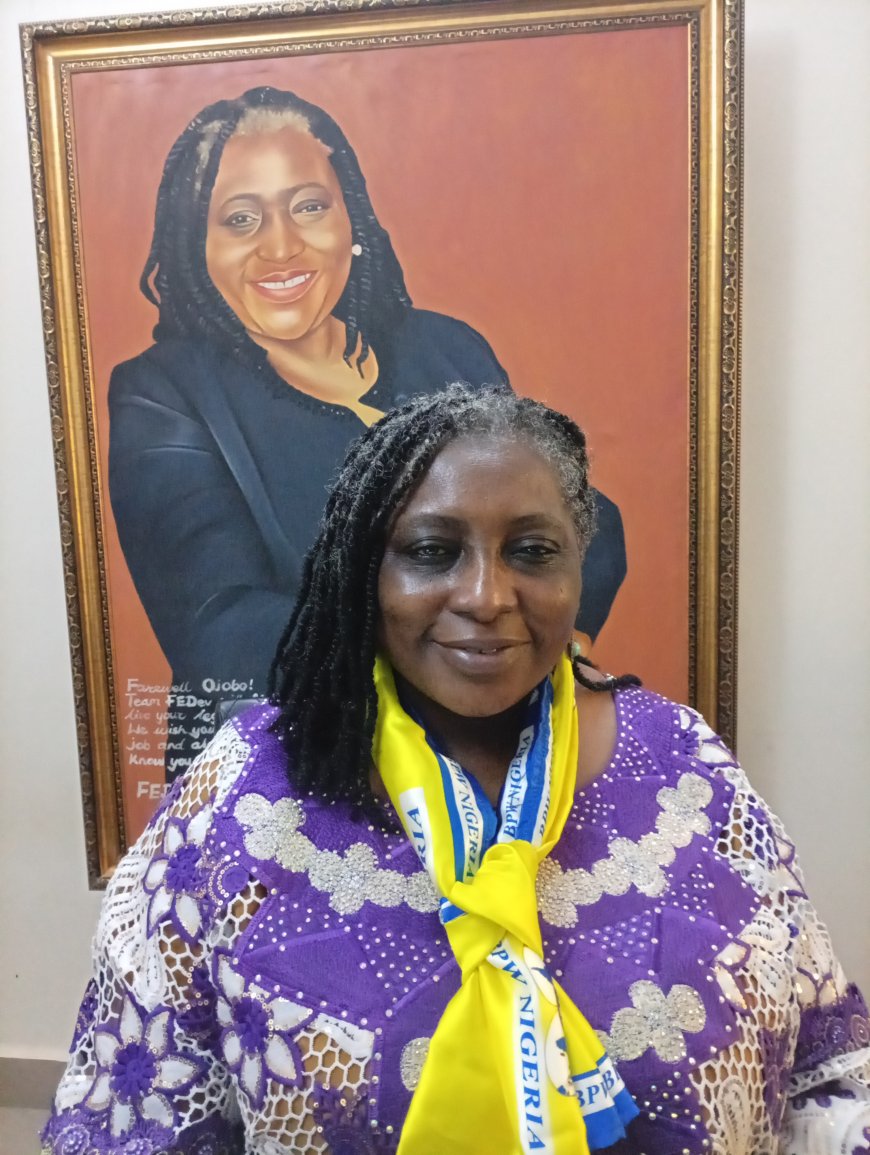
IWD 2026: BPW President Ojobo Ode Atuluku Pushes ‘Give to Gain’ Strategy to Drive Women’s Empowerment
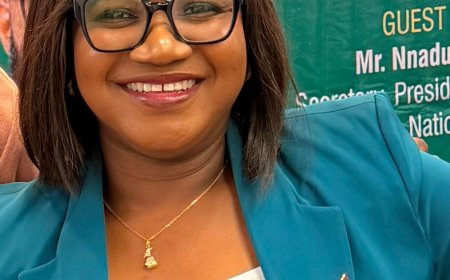
Every March, the world pauses to celebrate International Women’s Day—a day filled with tributes, conversations, and renewed commitments to gender equality. But for Ojobo Ode Atuluku, National President of the Federation of Business and Professional Women (BPW), the moment carries a deeper meaning—one that goes beyond celebration to reflection and resolve.
For Atuluku, the continued observance of International Women’s Day is both necessary and telling. Necessary because it amplifies the voices and realities of women and girls; telling because it underscores how much work remains undone.
“If we still have to dedicate a day to women, it means there is still a gap,” she says. “It is a time to reflect on where we are, acknowledge the gains, and refocus on what still needs to be done.”
This year’s theme, with its dual focus on justice, fairness, and action—and the civil society call to “give to gain”—resonates strongly with her. It speaks, she notes, to the urgency of moving beyond rhetoric to deliberate, sustained action.
Between Policy and Reality
Nigeria, like many countries, has established institutional frameworks aimed at advancing women’s rights and opportunities. Yet, as Atuluku points out, the existence of these structures has not always translated into meaningful impact.
From limited funding to weak policy implementation, and from cultural norms to structural constraints, the barriers remain deeply entrenched.
“There is a tendency to assume that once a ministry or policy exists, the job is done,” she explains. “But the real work lies in implementation—ensuring that these frameworks translate into real change in the lives of women.”
She highlights the need to fully operationalise instruments such as the National Gender Policy and enforce laws like the Violence Against Persons Prohibition (VAPP) Act, stressing that legislation without execution offers little relief.
At the same time, she identifies a critical opportunity in the push for reserved seats for women in governance—a move she believes could significantly strengthen women’s political representation and influence.
“It may not solve everything,” she says, “but it will raise the level of participation and ensure that women’s perspectives are better reflected in national decision-making.”
The Opportunity Gap
Despite incremental progress, Atuluku is unequivocal: women in Nigeria do not yet enjoy equal opportunities.
The barriers begin early. In some communities, cultural beliefs still limit girls’ access to education, driven by outdated assumptions about gender roles and family priorities.
Even where opportunities exist, structural challenges often stand in the way. Access to credit, for instance, remains a major hurdle for women entrepreneurs. Stringent collateral requirements and financial conditions exclude many from formal financing systems.
And when resources are secured, competing responsibilities frequently dilute their impact.
“Women often have to stretch their resources to meet family needs—education, healthcare, household responsibilities,” she notes. “So what should grow a business becomes something that sustains the family.”
Economic Empowerment: The Missing Link
For Atuluku, one of the most pressing concerns is the limited economic empowerment of women.
Across workforce participation, productivity, and leadership, women consistently rank lower than men—a reality she attributes to both systemic bias and structural limitations.
“There is still a preference for recruiting men into certain roles, especially in leadership and corporate spaces,” she says. “These biases, whether subtle or overt, continue to limit women’s advancement.”
She also challenges prevailing perceptions around maternity, arguing that childbirth should not be viewed as a professional disadvantage.
“Women are contributing to national development by raising the next generation,” she says firmly. “That responsibility should not become a basis for exclusion or discrimination in the labour market.”
Shaped by Women, Inspired by Leaders
Atuluku’s advocacy is deeply rooted in personal experience. From her early years in an all-girls school to her professional journey, she has been shaped by women who embodied excellence, discipline, and resilience.
She recalls teachers who went beyond the classroom to instil values of professionalism, creativity, and self-worth—lessons that have stayed with her over time.
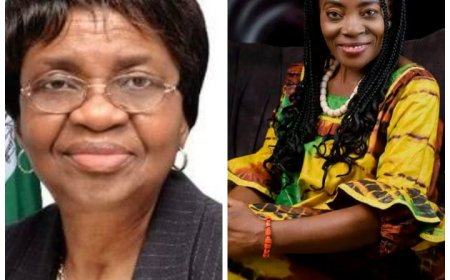
On the global stage, she draws inspiration from leaders like Amina Mohammed and Ngozi Okonjo-Iweala, women she describes as trailblazers who have broken barriers while remaining grounded in the pursuit of equity and inclusion.
Closer to home, she credits her mother’s entrepreneurial resilience and her father’s unwavering commitment to educating his daughters as foundational influences.
“My father invested in our education without hesitation,” she reflects. “And today, you see the ripple effect of that decision—not just in our lives, but in how others think about educating girls.”
A Message to the Next Generation
To young girls navigating their paths, Atuluku offers a message grounded in self-awareness and courage.
“Listen to your inner voice,” she advises. “There are many societal expectations that do not necessarily add value to your life. Stay grounded in your values, prepare yourself, and be willing to take risks.”
She believes that once individuals take that first step, opportunities and support often emerge in unexpected ways.
“The journey may not be easy,” she adds, “but clarity of purpose and integrity will guide you.”
Redefining Women’s Solidarity
In addressing the often-cited notion of rivalry among women, Atuluku offers a different perspective. What is sometimes described as a “pull-her-down syndrome,” she argues, is more accurately a reflection of limited opportunities.
“When there is only one seat at the table, naturally there will be competition,” she explains. “But when opportunities expand, collaboration becomes easier.”
She points to growing alliances among women across political, professional, and advocacy spaces—coalitions that are working collectively to advance shared goals.
From lobbying groups to multi-sector platforms, she sees a strengthening sisterhood that is increasingly focused on impact rather than individual gain.
“Women are coming together across divides to support one another,” she says. “And that is a powerful shift.”
Beyond Celebration: A Call to Action
For Atuluku, the true essence of International Women’s Day lies not in celebration alone, but in what follows.
It is in the policies enacted, the barriers dismantled, and the opportunities created.
It is in the willingness of institutions, communities, and individuals to “give” in order to achieve meaningful, collective progress.
“When women rise, the nation rises,” she says. “Gender equality is not just a women’s issue—it is central to national development.”
And so, beyond the speeches and ceremonies, her message is clear: the journey toward equality demands more than acknowledgement—it demands action.
What's Your Reaction?
 Like
2
Like
2
 Dislike
0
Dislike
0
 Love
2
Love
2
 Funny
0
Funny
0
 Angry
0
Angry
0
 Sad
0
Sad
0
 Wow
0
Wow
0