










EU Concludes €750,000 Digital Skills Programme to Drive Inclusive Growth in North-East Nigeria

EU Concludes €750,000 Digital Skills Programme to Drive Inclusive Growth in North-East Nigeria
The European Union (EU) has concluded its Digital Skills Promotion Programme aimed at empowering women, hard-to-reach youth, and persons with disabilities, marking the end of three years of targeted intervention to advance inclusive digital transformation and economic opportunity in Borno and Yobe States.
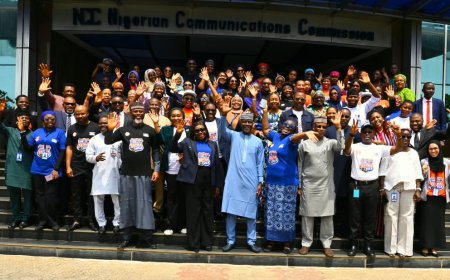
The programme, designed to reduce the digital gender gap and digital exclusion in fragile and conflict-affected communities, formally ended with a closing ceremony held in Maiduguri on 4 February 2026. The event brought together representatives of the European Union, implementing partners, civil society organisations, and state government officials to review achievements and lessons learned.
Funded by the European Union with a grant of €750,000, the initiative was implemented by ZOA International between 2023 and 2026. It focused on expanding access to digital skills, narrowing the digital gender divide, and strengthening the capacity of grassroots civil society organisations across 30 communities in Borno and Yobe States.
Speaking at the ceremony, the Head of Cooperation at the EU Delegation to Nigeria and ECOWAS, Massimo De Luca, highlighted the programme’s people-centred and inclusive approach to digital development.
“This project demonstrates how well-targeted digital investments can deliver lasting impact—by empowering communities, strengthening local institutions, and supporting inclusive economic growth,” De Luca said. “Through the Global Gateway strategy, the European Union is supporting practical digital transformation that responds to local realities and leaves no one behind.”
He stressed that digital inclusion is critical in conflict-affected regions, noting that access to digital skills enhances resilience, innovation, and meaningful participation in today’s economy.
“Digital inclusion is not a luxury; it is a necessity for stability, opportunity, and long-term recovery in marginalised communities,” he added.
Looking ahead, De Luca emphasised the EU’s focus on translating digital skills into tangible economic outcomes. “Our priority is ensuring that skills, infrastructure, and innovation lead to viable enterprises, job creation, and sustainable economic resilience at the community level,” he said.
Presenting an overview of the programme’s outcomes, ZOA Programme Manager, Godwin Dominic, disclosed that the initiative recorded significant measurable results.
“Over the implementation period, the programme trained 18,193 individuals, established 32 IT hubs, and supported the creation of a Digital Literacy Working Group to enhance coordination and sustainability,” Dominic said. “Additionally, six schools were equipped with access to IT services, expanding opportunities for digital learning across Borno and Yobe States.”
Representing the Borno State Government, the Executive Secretary of the Borno Information and Communication Technology Development Agency (BICTDA), Engr. Mohammed Kabir Wanori, commended the initiative for aligning with state development priorities and strengthening opportunities for women and youth.
As the programme draws to a close, partners reaffirmed their commitment to sustaining the digital infrastructure, skills, and local capacity developed through the initiative, ensuring continued support for inclusive economic participation and community resilience in North-East Nigeria.
What's Your Reaction?
 Like
0
Like
0
 Dislike
0
Dislike
0
 Love
0
Love
0
 Funny
0
Funny
0
 Angry
0
Angry
0
 Sad
0
Sad
0
 Wow
0
Wow
0