












Electronic Transmission: Why I Withdrew My Call for Division on Senate Floor Vote — Abaribe

Electronic Transmission: Why I Withdrew My Call for Division on Senate Floor Vote — Abaribe
By Anderson Osiebe
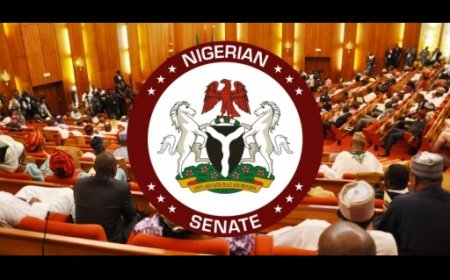
Senator Enyinnaya Abaribe has defended his decision to withdraw a call for division during Tuesday’s emergency plenary session convened by the Senate to deliberate on the controversial Clause 60 of the Electoral Act Amendment Bill — the provision addressing the Electronic Transmission of Election Results.
The emergency session was summoned amid heightened public interest and political tension over the future of electronic transmission within Nigeria’s electoral framework.
During deliberations, Senator Abaribe initially called for a division — a formal voting procedure used to accurately determine lawmakers’ positions on a matter. However, he subsequently withdrew the request, a move that sparked widespread criticism across media platforms.
Responding to the backlash, the Abia South lawmaker clarified that his action was neither a retreat nor a compromise, but a calculated legislative strategy aimed at safeguarding the broader objective of retaining electronic transmission in the final version of the Electoral Act.
According to Abaribe, proceeding with a division at that stage would likely have resulted in defeat, given the apparent numerical disposition in the chamber. Such an outcome, he argued, could have significantly weakened the reform effort and potentially jeopardized the inclusion of the provision in subsequent negotiations.
He emphasized that the legislative process extends beyond Senate deliberations.
“Essentially, because the process involves harmonization with the House of Representatives,” Abaribe explained, “it is only after the House of Representatives’ version is not approved that we can bring the sledgehammer of division.”
His remarks highlight a critical aspect of Nigeria’s lawmaking process. Where the Senate and the House of Representatives pass differing versions of a bill, both chambers must reconcile their positions through a harmonization committee. At that stage, contentious provisions are negotiated and finalized before the bill is transmitted for presidential assent.
Political observers note that forcing a division prematurely could have produced a recorded defeat, potentially weakening the Senate’s negotiating leverage during harmonization.
By withdrawing his call for division, Abaribe appears to have chosen strategic patience, preserving the option to deploy what he described as the “sledgehammer” — a decisive vote — should the harmonization process threaten the inclusion of electronic transmission.
The controversy underscores the tension between public expectations for immediate, assertive action and the often complex, incremental nature of legislative strategy.
While critics interpret the withdrawal as a step back, supporters argue that legislative battles are not always won through dramatic confrontation, but through timing, negotiation, and tactical restraint.
As debate over electoral reforms continues, electronic transmission remains central to Nigeria’s democratic credibility, transparency, and public confidence in elections.
The forthcoming harmonization process between the Senate and the House of Representatives will ultimately determine the fate of Clause 60 — and whether electronic transmission of results remains firmly entrenched in the nation’s electoral law.
What's Your Reaction?
 Like
0
Like
0
 Dislike
0
Dislike
0
 Love
0
Love
0
 Funny
0
Funny
0
 Angry
0
Angry
0
 Sad
0
Sad
0
 Wow
0
Wow
0