









Democracy Beyond Elections: Amb. Ejinaka Charts Africa’s Way Forward”

Democracy Beyond Elections: Amb. Ejinaka Charts Africa’s Way Forward”
By: Peace Ofeoshi
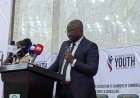
In an exclusive visit to his office, former Nigerian envoy Amb. John Chika Ejinaka briefed the media on the just-concluded 8th Annual Conference of the Association of Foreign Relations Practitioners of Nigeria (AFRPN), themed “The Challenge of Democratic Governance in Africa: Mega Trends and Leveraging Opportunities for Consolidation.”
The conference, which brought together diplomats, foreign policy experts, and governance stakeholders, explored the pressures facing African democracies and the opportunities for consolidating democratic governance.
Amb. Ejinaka emphasized that Africa’s democratic future depends on institutional strength, citizen engagement, and adherence to constitutional norms, rather than elections alone.
“Democracy is more than elections; it is about building systems that survive beyond individual leaders. Without strong institutions, democracy becomes fragile,” he said during the exclusive interview.
Current Challenges in African Governance
Amb. Ejinaka highlighted the critical issues threatening democratic consolidation:
Constitutional manipulations and tenure elongation by leaders
Weak or compromised judicial and electoral institutions
Youth unemployment and growing economic inequality
Resurgence of military interventions in West Africa
Rising citizen frustration with governance failures
“Recent coups in Burkina Faso, Niger, and Mali reflect systemic weaknesses. When citizens feel excluded or unrepresented, instability becomes inevitable,” he explained.
He added that unconstitutional changes are not limited to military takeovers; civilian political maneuvers that undermine constitutions also erode democracy.
Mega Trends Shaping Africa’s Democracy
The AFRPN conference identified several mega trends impacting governance across the continent:
Rapidly growing youth populations demanding accountability
Digital technology amplifying civic participation
Economic pressures and inequality
Executive overreach and constitutional elongation
Renewed military interventions in parts of West Africa
Amb. Ejinaka noted that these trends could either reinforce or weaken democracy, depending on how African governments respond.
“When democracy fails to deliver tangible benefits, public frustration grows. That frustration creates vulnerabilities within the system,” he said.
Way Forward: Reform and Engagement
According to Amb. Ejinaka, consolidating democracy requires a multi-pronged approach:
Strengthen Institutions: Empower courts, electoral commissions, and oversight bodies to function independently.
Respect Constitutional Term Limits: Leaders must honor tenure provisions and resist amendments for personal gain.
Promote Transparency and Accountability: Governance must deliver real results for citizens.
Invest in Civic Education: Citizens should understand their rights and responsibilities.
Engage Youth: Africa’s young population must be included as active participants in governance.
“If young people are included in governance processes, they will defend democracy. Exclusion breeds instability; inclusion strengthens the system,” Amb. Ejinaka said.
A Defining Moment for Africa
Amb. Ejinaka stressed that Africa stands at a critical crossroads.
“Democracy is Africa’s best option, but it must deliver tangible benefits. Strengthening institutions, upholding constitutional governance, and engaging citizens is the way forward. The choices made today will shape the continent’s democratic trajectory for generations,” he concluded.
The AFRPN conference and Amb. Ejinaka’s briefing underscored that Africa’s democratic consolidation will depend not only on elections but also on strong institutions, principled leadership, and active citizen participation.
What's Your Reaction?
 Like
0
Like
0
 Dislike
0
Dislike
0
 Love
1
Love
1
 Funny
0
Funny
0
 Angry
0
Angry
0
 Sad
0
Sad
0
 Wow
0
Wow
0