







FROM INFERNOS TO DECORUM: SHEHU MOHAMMED’S MAGIC WAND IN REWRITING NIGERIA’S TANKER SAFETY STORY
FROM INFERNOS TO DECORUM: SHEHU MOHAMMED’S MAGIC WAND IN REWRITING NIGERIA’S TANKER SAFETY STORY
By Osondu Ohaeri
The Safe-to-Load (STL) Programme, introduced by the Federal Road Safety Corps (FRSC) in September 2015, marked a decisive turning point in Nigeria’s road safety management—particularly in the transportation of petroleum products. Before its introduction, the country faced a deepening safety crisis.
Records indicated an average of 352 tanker-related killed or seriously injured (KSI) crashes annually, with about 1.68 crashes recorded per billion litres of petroleum products transported. Projections at the time were even more alarming, estimating as many as 384 tanker crashes and over 17,000 fatalities within a single year if urgent action was not taken.
Tragic incidents such as the Okobie tanker explosion, which claimed over 100 lives, alongside multiple infernos in Lagos and Onitsha, highlighted the devastating consequences of systemic failures in the haulage of hazardous goods.
The urgency for intervention stemmed from a convergence of risk factors. Nigeria relies on road transport for over 98% of petroleum distribution, with between 6,500 and 8,000 tanker trucks operating daily. This heavy dependence placed enormous pressure on an already fragile safety framework. Compounding the challenge were poor vehicle conditions, weak regulatory enforcement, widespread non-compliance with safety standards, and a significant gap in driver competence—fewer than 5% of drivers held the appropriate Class G licence at the time.
In response, the FRSC implemented a comprehensive set of reforms under the STL framework. Central to this was the institutionalisation of pre-trip safety inspections at petroleum depots, ensuring that only roadworthy tankers were allowed to load products. This was reinforced by in-depot safety education, sustained stakeholder engagement, and intensified roadside enforcement.
Targeted campaigns such as Operation Scorpion strengthened compliance, while partnerships with key industry stakeholders—including NUPENG, MEMAN, DAPMAN, and IPMAN—helped build a shared culture of responsibility across the sector.
Capacity building became a critical pillar of the programme. Numerous technical training sessions were conducted for FRSC desk officers, complemented by strategic collaborations with private sector players. A notable milestone was the international training programme sponsored by Total Nigeria Plc, which trained about 40 FRSC personnel in France, exposing them to global best practices in petroleum haulage safety and significantly enhancing enforcement capacity.
Government support further bolstered these efforts through policy alignment and stakeholder mobilisation, including adherence to international standards such as the ADR framework for the transportation of dangerous goods. National workshops and consultative forums helped harmonise safety expectations across the industry, while reforms in the downstream petroleum sector improved operational accountability.
These interventions have delivered measurable gains. Crash rates declined steadily from 14.34 per billion litres transported in 2016 to 11.88 in 2022—evidence of improved vehicle integrity, better-trained drivers, and more effective enforcement mechanisms.
Nevertheless, emerging challenges persist. Fatigue driving, excessive night operations, and the use—or deliberate tampering—of speed limiting devices remain major concerns. The resurgence of oversized “monster” tankers exceeding recommended capacity, the dangerous practice of fuel bypass, inadequate hazardous material labelling, and deteriorating road conditions continue to complicate safety management. Additionally, shifts arising from deregulation in the petroleum sector have introduced new risk dynamics requiring adaptive strategies.
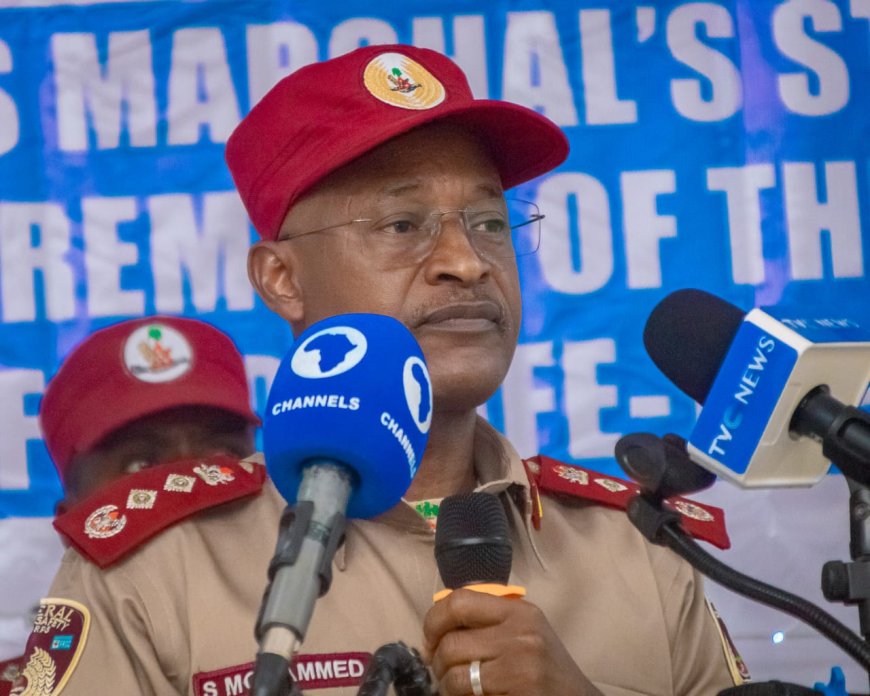
Under the leadership of Corps Marshal Shehu Mohammed, the STL Programme is undergoing renewed strengthening and strategic repositioning. His administration is prioritising the integration of technology into enforcement, including real-time monitoring systems, data-driven decision-making, and enhanced inter-agency collaboration within the petroleum sector.
There is also a deliberate push to institutionalise annual technical vetting of tanker trucks, enforce mandatory training and certification for drivers handling hazardous materials, and promote the installation of onboard monitoring devices to track driver behaviour.
Infrastructure development is receiving attention through collaboration with relevant agencies, particularly in establishing transit truck parks to regulate driver rest and reduce fatigue-related incidents. Enforcement along critical corridors is also being intensified to curb unsafe practices after depot departure.
Speaking recently in Lagos while flagging off a technical training programme for FRSC desk officers implementing the STL initiative, Corps Marshal Shehu Mohammed was unequivocal:
“Any tanker that fails to meet Safe-to-Load requirements shall not be permitted to load under any circumstance.”
He further emphasised that all tanker-related crashes will be thoroughly investigated, with accountability extending across the entire value chain—from inspecting officers and depot managers to drivers and vehicle owners.
“Tampering with speed limiting devices or any critical safety system will attract strict enforcement actions, including prosecution. Operators must comply fully with prescribed maintenance schedules, particularly for API-standard manhole covers and valves,” he added.
Reiterating the Corps’ resolve, he stressed that intensified monitoring—both physical and technology-driven—will ensure that the era of impunity on Nigerian highways is over.
The Safe-to-Load Programme has undeniably transformed the safety landscape of petroleum transportation in Nigeria. It has reduced crash rates, improved operational standards, and fostered a culture of accountability within the haulage industry.
Yet, the journey toward eliminating tanker-related crashes entirely is ongoing. Sustained commitment, stronger enforcement, and continuous innovation will be critical to consolidating these gains. With strategic leadership and collective responsibility, Nigeria is steadily moving toward a future where the transportation of petroleum products is not only efficient but significantly safer for all.
What's Your Reaction?
 Like
0
Like
0
 Dislike
0
Dislike
0
 Love
0
Love
0
 Funny
0
Funny
0
 Angry
0
Angry
0
 Sad
0
Sad
0
 Wow
0
Wow
0