












X-RAYING SHEHU MOHAMMED’S TRANSFORMATIVE STRIDES IN ENSURING SAFE HIGHWAYS DURING FESTIVE SEASONS
X-RAYING SHEHU MOHAMMED’S TRANSFORMATIVE STRIDES IN ENSURING SAFE HIGHWAYS DURING FESTIVE SEASONS
By Osondu Ohaeri
The roar of engines, the surge of travellers, and the urgency of reunion have long defined Nigeria’s festive seasons. Yet beneath the excitement lies a persistent danger: the spike in road traffic crashes that has, for years, cast a shadow over national celebrations.
At such critical moments—when navigating the nation’s highways becomes increasingly challenging—the Federal Road Safety Corps (FRSC), Nigeria’s lead agency for road safety management and traffic administration, has remained steadfast in its statutory mandate. Beyond regulation, it stands as a vigilant guardian of lives and highways.
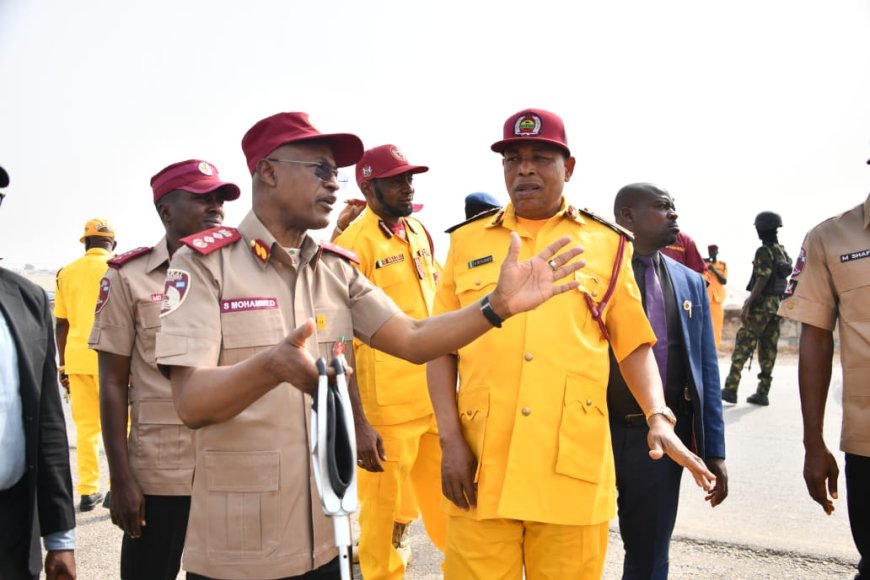
Under the astute leadership of Corps Marshal Mohammed Shehu, the FRSC has redefined festive road safety management through a highly coordinated, intelligence-driven approach. What was once largely reactive has evolved into a proactive, data-driven system that anticipates risks, strategically deploys resources, and delivers measurable outcomes.
Festive periods in Nigeria—particularly the Yuletide, Easter, Eid celebrations, and the high-traffic “ember months”—have historically witnessed increased vehicular movement, congestion, and a surge in road crashes. In response, the FRSC has institutionalised comprehensive seasonal interventions aimed at mitigating these risks and ensuring safer journeys nationwide.
At the heart of these interventions is the Corps’ flagship initiative, Operation Zero Tolerance, conducted annually as a reinforcement of the Ember Months campaign. While the Ember campaign begins in September, Operation Zero Tolerance runs from mid-December to mid-January. This initiative reflects a deliberate strategy anchored on strict enforcement of traffic laws, clearance of road obstructions, and real-time highway monitoring to ensure swift emergency response.
During the 2025 Ember Months campaign, the Corps reinforced its efforts with the theme: “Take Responsibility for Your Safety: Stop Distracted Driving,” building on previous initiatives such as the 2024 Operation Zero Tolerance. These campaigns underscore the FRSC’s sustained commitment to behavioural change and accident prevention.
The scale of these operations reflects both capacity and commitment. During the 2023 Ember Months, over 45,000 personnel—including regular and special marshals—were deployed across critical corridors such as the Lagos-Ibadan Expressway, Abuja–Kaduna–Zaria–Kano highway, and the East-West Road. This deployment was supported by extensive logistics, including patrol vehicles, ambulances, radar guns, breathalysers, reflective materials, and both light and heavy-duty tow trucks, ensuring rapid response to emergencies.
The results were significant: a measurable reduction in fatal crashes, widely attributed to heightened enforcement and increased operational visibility.
Beyond the Ember Months, the FRSC sustains its momentum through specialised operations during major celebrations. The 2024 Yuletide exercise, tagged “Operation Christmas/New Year Special Patrol,” featured 24-hour surveillance, aerial monitoring, mobile courts for on-the-spot prosecution of offenders, and seamless collaboration with sister agencies such as the Nigeria Police Force and the Nigeria Security and Civil Defence Corps.
In addition, the activation of National Traffic Radio (107.1 FM) provided real-time traffic updates and safety advisories, helping motorists navigate diversions and avoid gridlocks—thereby enhancing public awareness and compliance.
Sallah seasons, characterised by intense inter-state travel, have also benefited from targeted interventions. During the recent Eid-el-Fitr celebration, a six-day nationwide special patrol ensured the strategic deployment of personnel and resources to manage traffic surges effectively. Similarly, during the 2025 Eid-el-Kabir, over 36,000 personnel and 1,095 patrol assets were mobilised, with intensified operations along major northern corridors, including Kano–Zaria–Kaduna–Abuja, Dutse–Azare–Potiskum, Jos–Akwanga, and Bauchi–Gombe routes.
These operations extend beyond enforcement to proactive risk mitigation. FRSC patrol teams consistently identify and address dangerous practices such as tyre violations, overloading, and excessive speeding—common infractions during festive travel. These interventions have contributed to a noticeable decline in crash severity, reinforcing the Corps’ preventive approach.
A defining strength of the FRSC under Mohammed Shehu is its emphasis on behavioural change. Campaigns such as “Drive to Stay Alive,” “Don’t Drink and Drive,” and “Use the Seatbelt” are amplified during peak travel periods through strategic engagement with transport unions, including the National Union of Road Transport Workers (NURTW) and the Road Transport Employers Association of Nigeria (RTEAN). Through town hall meetings, roadside sensitisation, and sustained media outreach, the Corps ensures these messages resonate with the motoring public.
The integration of technology has further enhanced operational efficiency. Innovations such as speed-limiting devices, the FRSC Mobile App, the National Vehicle Identification Scheme (NVIS), as well as the deployment of body cameras and surveillance systems, have strengthened enforcement transparency and accountability. These tools enable precise identification of high-risk behaviours and locations, facilitating targeted, evidence-based interventions.
What's Your Reaction?
 Like
0
Like
0
 Dislike
0
Dislike
0
 Love
0
Love
0
 Funny
0
Funny
0
 Angry
0
Angry
0
 Sad
0
Sad
0
 Wow
0
Wow
0