

















Teacher Education Must Be Priority in Nigeria’s Development Agenda – NCCE Boss
Teacher Education Must Be Priority in Nigeria’s Development Agenda – NCCE Boss
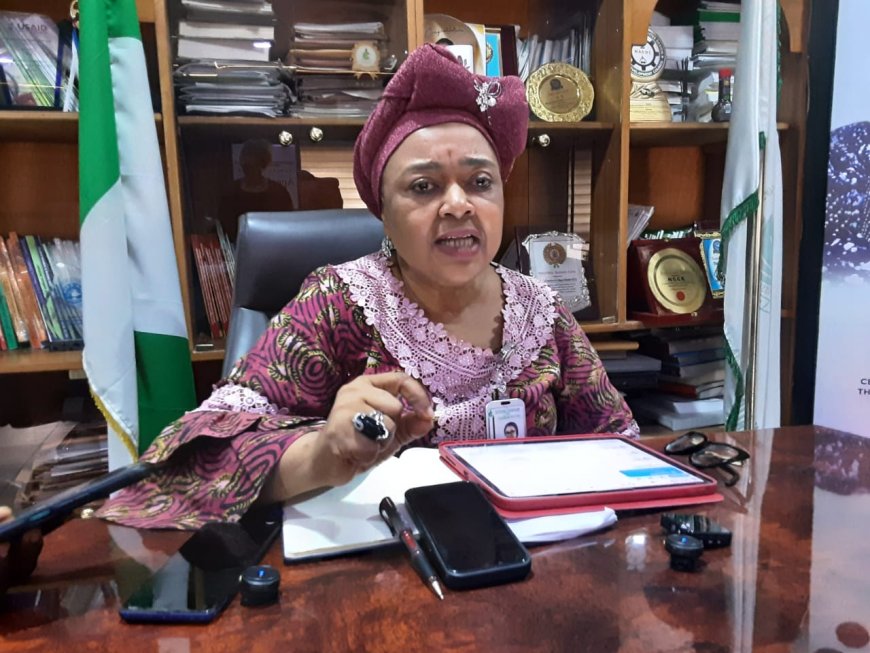
The Executive Secretary of the National Commission for Colleges of Education (NCCE), Dr. Angela Ajala, has called on the Federal Government and other stakeholders to prioritise teacher education, describing it as fundamental to building a world-class education system and developing competent manpower for national growth.
Ajala made the call on Tuesday in Abuja during an interview with the Association of Corporate Online Editors (ACOE), where she emphasised the need for sustained investment, strategic partnerships and policy reforms to reposition teacher education in Nigeria.
She noted that the quality of teachers largely determines the standard of professionals produced by any nation, stressing that every profession is built on the knowledge and foundation provided by teachers.
“Nigeria cannot build a world-class education system with second-class attention to teacher education. Teacher education must be the priority at the front burner of anything Nigeria wants to do. If you miss it with teacher education, you miss it with Nigeria,” she said.
The NCCE boss, who described herself as a trained teacher with over 30 years of experience, said the commission was implementing reforms to make Colleges of Education more attractive and equip prospective teachers with relevant competencies.
She identified the introduction of the dual mandate, which empowers Colleges of Education to award both the Nigeria Certificate in Education (NCE) and Bachelor of Education (B.Ed.) degrees, as a major initiative to revitalise teacher education.
According to her, the policy, signed into law by President Bola Tinubu in 2023, was designed to address declining interest in the teaching profession and strengthen the status of the NCE qualification.
Ajala also highlighted the ongoing review of the teacher education curriculum, explaining that the new competency-based approach allocates 70 per cent to practical training and 30 per cent to theoretical learning.
She said the revised curriculum had been expanded to incorporate emerging fields such as Artificial Intelligence, robotics, data analytics, cybersecurity and coding, particularly in Computer Education.
The commission, she added, had introduced skills certification into the five-year programme, comprising three years of NCE training and two years of degree studies.
She explained that the initiative would equip students with additional vocational and entrepreneurial skills, enabling them to explore alternative economic opportunities alongside teaching.
On funding, Ajala acknowledged that government resources alone were insufficient to drive the scale of reforms required, making partnerships with development agencies and international institutions critical.
She disclosed that the NCCE was collaborating with the European Union, UNESCO and the British Council, while Oxford University was supporting some aspects of the reforms and Cambridge University had indicated interest in providing assistance.
Ajala further revealed that the commission had established a Reform Delivery Unit to monitor the implementation of its initiatives and provide quarterly reports. She also disclosed plans to introduce a digital dashboard to track activities and progress across Colleges of Education nationwide.
According to her, the NCCE's 2026–2031 Strategic Plan targets the enrolment of at least 80 per cent of Colleges of Education into the dual mandate by 2031.
She emphasised the importance of attracting more young Nigerians into the teaching profession through improved career opportunities, quality training and greater awareness of the profession's prospects.
Ajala urged policymakers, development partners and other stakeholders to prioritise teacher education, stressing that meaningful investment in teachers remains essential to strengthening Nigeria's education system and achieving sustainable national development.
What's Your Reaction?
 Like
0
 Dislike
0
 Love
0
 Funny
0
 Angry
0
 Sad
0
 Wow
0