











Senate Committee Backs Customs' 2026 Budget as NCS Beats Revenue Target
Senate Committee Backs Customs' 2026 Budget as NCS Beats Revenue Target
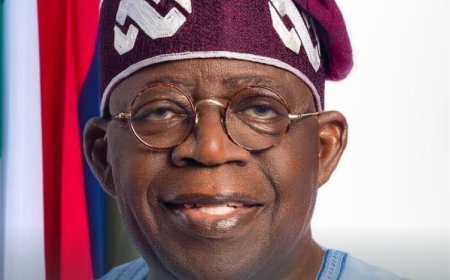
The Senate Committee on Customs has commended the ongoing reforms in the Nigeria Customs Service (NCS), praising President Bola Ahmed Tinubu for his support in repositioning the Service to enhance revenue generation, facilitate trade and strengthen investor confidence.
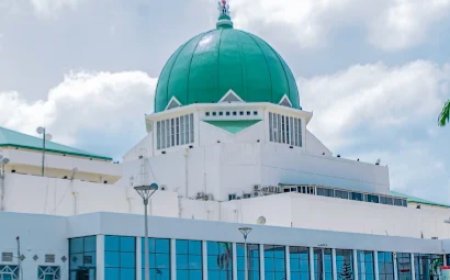
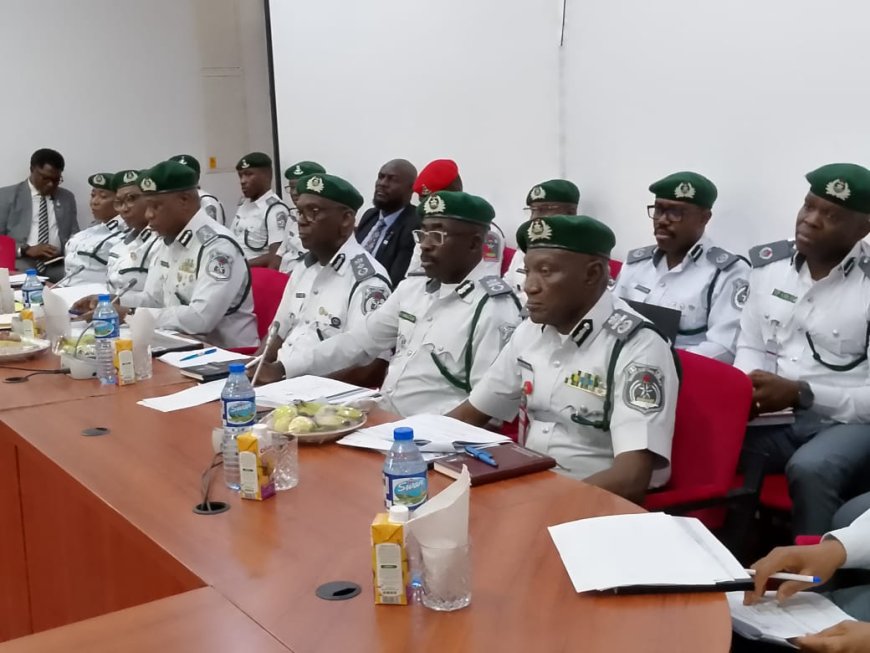
Chairman of the Senate Committee on Customs, Jibrin Echuochuo, gave the commendation during the defence of the NCS 2026 budget proposal before the committee.
He said the President's commitment to the reform agenda, despite initial challenges, has yielded positive results through improved revenue performance, increased economic participation and enhanced confidence in Nigeria's investment climate.
The lawmaker also lauded President Tinubu for approving a six-month extension of the Service's reform mandate, describing the decision as a strategic move that would enable the NCS to consolidate ongoing reforms and deliver even greater outcomes.
According to him, regular engagements between the Senate Committee and the Customs Service have strengthened revenue mobilisation while supporting infrastructure projects aimed at improving trade, connectivity and national economic growth.
He stressed that tax revenue remains one of the Federal Government's major sources of income and urged the Service to sustain the implementation of its reforms and strategic projects throughout 2026.
Presenting the Service's budget performance, the Comptroller-General of Customs disclosed that the NCS generated ₦7.27 trillion between January and May 2026, surpassing its revenue target of ₦6.5 trillion. He noted that the figure represents a 10.2 per cent increase over the corresponding period in 2025, despite prevailing economic and policy challenges.
The Customs boss explained that the suspension of the proposed excise duty on telecommunications services, the non-implementation of the Green Tax, and extensive duty waivers on essential imports—including food items, medical supplies, machinery and petroleum products—affected projected revenue during the period.
He disclosed that imports benefiting from the waivers were valued at about ₦34.5 trillion, while only four of the eleven proposed excisable products were implemented, limiting expected excise collections.
The Comptroller-General also cited global developments, including the Russia–Ukraine conflict and tensions involving Iran, the United States and the Strait of Hormuz, as factors disrupting global supply chains and reducing cargo volumes, with implications for customs revenue.
Despite these challenges, he said the B'Odogwu Unified Customs Management System is now fully operational across Nigeria's ports, significantly improving customs administration, trade facilitation and revenue collection.
He added that the Service is intensifying revenue recovery efforts, modernising operations and expanding capacity-building initiatives through partnerships with the World Bank, International Monetary Fund and World Customs Organization.
On the 2026 fiscal plan, the Comptroller-General said the Service is projecting a revenue target of approximately ₦12.35 trillion. He also proposed ₦421.77 billion for personnel costs, ₦300.77 billion for overhead expenditure and about ₦1.65 trillion for capital projects covering infrastructure, ICT development, equipment procurement, project completion and contractual obligations.
Reaffirming the Service's commitment to transparency and accountability, the Comptroller-General assured lawmakers that the Nigeria Customs Service would continue to submit to legislative oversight while strengthening trade facilitation and revenue generation.
He appealed to the Senate Committee to approve the proposed 2026 budget, thanking members for their continued support and guidance.
What's Your Reaction?
 Like
0
Like
0
 Dislike
0
Dislike
0
 Love
0
Love
0
 Funny
0
Funny
0
 Angry
0
Angry
0
 Sad
0
Sad
0
 Wow
0
Wow
0